
Light, chewy, and tangy, these Sourdough Egg Noodles turn a few pantry staples into a comforting, homemade staple for soups, stroganoff, or simple buttered noodles. They use everyday ingredients and roll out in minutes, making them perfect for busy weeknights or meal prep. Try a tangy loaf alongside them like this blueberry lemon sourdough bread recipe for a complete sourdough spread.
Why You’ll Love This Sourdough Egg Noodles
- Deep, tangy flavor from the starter that beats store-bought pasta.
- Quick to mix and roll for fast weeknight dinners.
- Great for meal prep — cook now or dry for later.
- Family-friendly texture that kids and adults both enjoy.
- Versatile: use in soups, with sauces, or simply buttered.
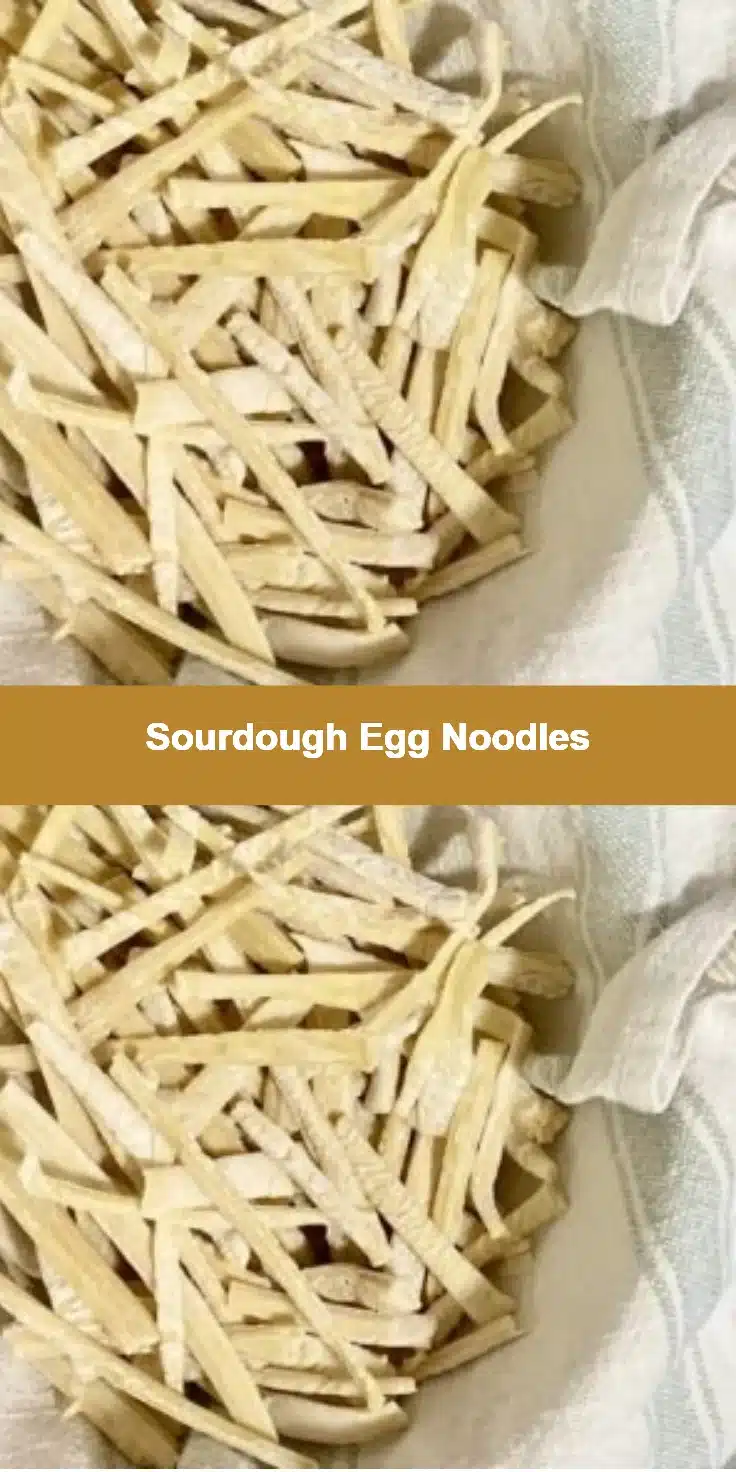
Ingredients Needed
- Eggs & Starter
- 2 large eggs
- 1/4 cup sourdough starter (active or discard)
- 1/4 cup warm water
- Dry Ingredients
- 1 tsp salt
- 2–2½ cups all-purpose flour
Step-by-Step Instructions
- Add all the ingredients to a large bowl or the bowl of your stand mixer, beating lightly to combine.
- Add flour 1/2 cup at a time until the dough is firm but pliable for rolling out.
- Turn the dough onto a well-floured surface and roll into a large rectangular shape. For thinner, flatter noodles roll dough out to about 1/8th an inch or less — SEE NOTE ONE for tips about thinness. Noodles that are not very thin will be more like dumplings after they have cooked (they still taste great!).
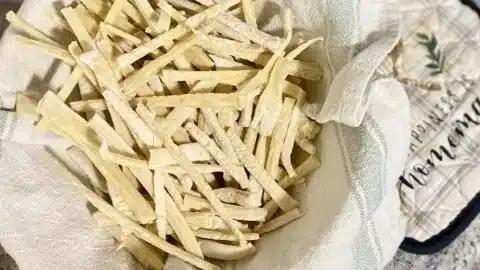
- Using a pizza cutter, cut the dough into long thin strips.
- To cook right away: boil noodles in soup or a pot of boiling water about 8–10 minutes until tender.
- To dry: place noodles on a drying rack or flat surface for about 24 hours or until noodles pass the snap test — SEE NOTE TWO.
Serving Suggestions Sourdough Egg Noodles
- Toss with browned butter, sage, and grated Parmesan for a simple side.
- Stir into chicken noodle soup or rich beef stroganoff.
- Serve with a creamy mushroom sauce and fresh herbs.
- For a hearty breakfast idea, top with a fried egg and a side of air fryer egg and cheese toast.
- Finish with a sprinkle of toasted breadcrumbs or chopped scallions for crunch.
Tips for Success Sourdough Egg Noodles
- If dough is sticky, add flour 1 tablespoon at a time; avoid over-flouring to keep noodles tender.
- Roll thinner for delicate noodles and thicker for dumpling-like bites.
- Dry noodles completely before storing to prevent mold; use airtight containers once fully dry.
- Cook a small test noodle to check salt and doneness before boiling the whole batch.
- Store cooked noodles in the fridge up to 3 days or freeze in portions for longer storage.
Variations
- Add 1 tsp dried herbs or finely chopped fresh herbs to the dough for a savory twist.
- Swap half the all-purpose flour for whole wheat for a nuttier flavor and firmer texture.
- Make a gluten-reduced batch by mixing in a small portion of oat flour (expect different texture).
- If you have discard to use elsewhere, try sweet sourdough baking like blueberry muffins with sourdough discard to avoid waste.
Follow us on Pinterest for more cozy ideas.
Sourdough Egg Noodles
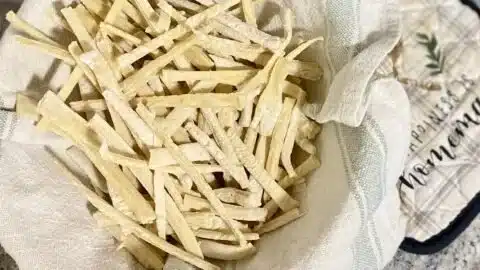
Light, chewy, and tangy, these Sourdough Egg Noodles are an excellent homemade option for soups, stroganoff, or buttered noodles made from pantry staples.
Ingredients
Eggs & Starter
- 2 large large eggs
- 1/4 cup sourdough starter (active or discard)
- 1/4 cup warm water
Dry Ingredients
- 1 tsp salt
- 2–2½ cups all-purpose flour
Instructions
Preparation
- Add all the ingredients to a large bowl or the bowl of your stand mixer, beating lightly to combine.
- Add flour 1/2 cup at a time until the dough is firm but pliable for rolling out.
- Turn the dough onto a well-floured surface and roll into a large rectangular shape. For thinner, flatter noodles roll dough out to about 1/8th an inch or less.
- Using a pizza cutter, cut the dough into long thin strips.
Cooking
- To cook right away: boil noodles in soup or a pot of boiling water about 8–10 minutes until tender.
- To dry: place noodles on a drying rack or flat surface for about 24 hours or until noodles pass the snap test.
Notes
If dough is sticky, add flour 1 tablespoon at a time; avoid over-flouring to keep noodles tender. Roll thinner for delicate noodles and thicker for dumpling-like bites. Dry noodles completely before storing to prevent mold; use airtight containers once fully dry. Cook a small test noodle to check salt and doneness before boiling the whole batch. Store cooked noodles in the fridge up to 3 days or freeze in portions for longer storage.